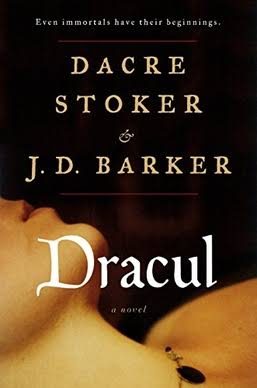


There’s a fascinating way in which we crave the existence of the supernatural, Dacre Stoker’s connection, however, is more prominent than most. Stoker, as his name suggests, is the great grand-nephew of the titular Bram Stoker, the original author of Dracula (1897). This connection allows for a delightfully transient experience as Dacre makes good use of the (unpublished) first hundred pages of the original manuscript. We follow a twenty-one year old Bram Stoker through a singular night in Whitby Abbey, hunted by a mysterious spectre that you nor he can truly pin-point he writes the story of his life, his epitaph.
Stoker’s younger life is shrouded in illness, a sickly child confined to the attic in his family home in Dublin, taken care of by his sister, Matilda, and their nanny, Ellen Crone (the actual name of the original Stoker nanny). Bram and Matilda become embroiled in a mystery regarding the disappearances of people in town, their connections leading them to question those closest to them. After a miraculous recovery from a fatal illness, Bram is left with more questions than answers: Ellen’s presence in his life most of all. But as the winding path to truth begins to show itself, Matilda witnesses Ellen’s disappearance. But what happens when she appears again years later, ageless and whispering the name Dracul?
Dacre Stoker shares in his great-uncle’s ability to weave a tale, that much is clear. Throughout the book we are taken between Bram’s night in Whitby Abbey and his childhood and young adulthood. The kicker is that the titular Drac remains an ominous, yet absent figure throughout most of the story. I enjoyed this, preferring to delve into the relationships between Bram and Matilda and Ellen. The story does not want to draw you in with more information on the original Dracula but instead seeks to fill the gaps of fiction with something to chew on.
Set in much the same way as the original Dracula, the book works with first hand accounts from the diaries of each character and their experiences, peppered with news articles, obituaries and telegrams. This style of writing keeps you on your toes, you do not spend long winded chapters trudging through the drudgery of everyday life- despite the large page count.
With regards to the prose and the stylistic avenues the book takes it is undoubtedly a horror, but not one that is going to have you sat up in bed with a flashlight and a snub-nosed revolver. It is thrilling, yes, but it is also a wonderful introduction to the horror genre in general.
I highly recommend this novel to any Dracula fan, horror enthusiast, or anyone who just wants a good book to read this Halloween. Enjoy.